Tiny House, Big View

Today’s post is by guest blogger Sophia Vastek.  She last wrote about composer John Cage. This week, a heart-opening summer experience…

I spent four weeks in upstate New York this summer, participating in a month-long, multi-disciplinary workshop with architects, engineers, visual artists, writers, photographers, and filmmakers called Arts, Letters & Numbers. [ALN] I really had no idea what I was getting myself into when my partner and I agreed to help build a music program into this existing workshop.  It was often grueling, collaborative work – intimate but also lonely.  But I ended up learning so much about what it means to create and build.

While we were there, one of the visiting artists – Bart Drost – built a tiny house (see the picture below).  He spent only a couple days building, and once finished, he invited every participant to come into his new space one by one and spend some time inside.  We weren’t told what we were going to do there.  I arrived at my scheduled time, admittedly a little apprehensive.  Some of the participants had been spending whole days inside this house…. He took me inside and sat me down at the desk, which occupied most of the floor space of the house. On the desk was a stack of paper and writing/drawing tools.  He gave me the simple task of drawing something that related to this idea: “A time when your outside was different from your inside.”  And then, with a huge smile, he told me, “everyone can draw!”

I spent about 3 hours inside his house, alone, thinking about that idea. Starting figuratively, moving towards the abstract. I ended up creating a small installation with string and cut paper, and when I was finished, I showed him my work.  He asked me what it meant, and I described the time after my father had died when I felt that I couldn’t grieve in public. My insides were quite different from my outside.  We had a beautiful conversation as I shared this most intimate story.  All in his tiny house.  

He did that with about 25 people. Imagine the stories he must have heard.

Once everyone had finished their time in his house, he put the art on display inside (anonymously) and opened it to the public.  The house was a witness to each of our stories.  And memorialized and celebrated them.  

He taught me so much through that experience.  That we need time alone, to sit quietly and meditate on our stories.  That we need time to manifest those stories. That we need time to create.  And most importantly, he taught me that everyone can create when given the right space.

At its heart, Arts Letters & Numbers is about creating a space where everyone is safe.  We all need spaces like these – places where people aren’t afraid to sing out loud, where people can cry publicly and without shame, where people can hold each other when they need to be held, where people can dance without fear of who’s watching, where people can create art without fear of the “critique”.  I realized as I was leaving that I am beyond privileged to have been a part of such an environment. And ultimately, I learned that I need to work hard to carry this forth – to create these kinds of spaces in my daily life in the “real world” for myself and for others.  
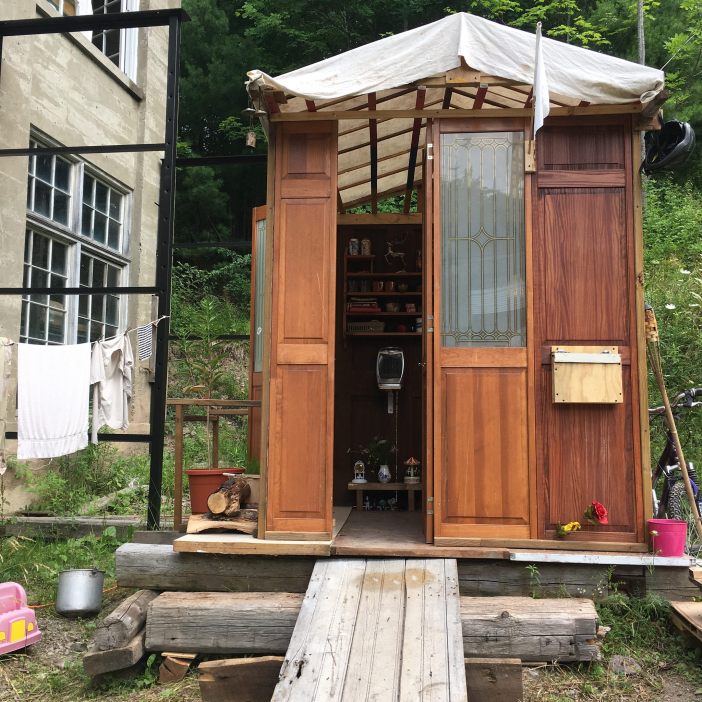
27963529643_5277722fab_k.jpg


* * * * *

Where I’ll be:

September 4 through November 20 – organist/choir director at Chevy Chase Presbyterian Church (1 Chevy Chase Circle, Washington, D.C.) while their Music Director is on sabbatical.

Friday, September 9 at 7:30 p.m., Let’s Dance! Music for Two Pianos (no actual dancing is involved). Sophia Vastek and Sonya Sutton play music of Manual Infante, Witold Lutoslawski, Benjamin Britten and Sergei Rachmaninoff.  We are raising money for The House of Ruth, an organization that helps women and children coming out of domestic violence and homelessness.  I will match your gifts to support their good work.Contact me directly if you would like to receive an invitation.

October 5 – Millennium Stage, Kennedy Center, 6:00 p.m., I will playing on a program with Furia Flamenco and Guillermo Christie

Also in October, I will be playing for the High Holy Days (a first for me) of the Bethesda Jewish Congregation.

* * * * *

This blog represents my attempt to put thoughts together on various things that seem to connect – in my mind anyway. More often than not new ideas first involve reaching back to what was and I can only hope that the prehistoric San cave painting at the top of this page inspires all kinds of new connections between old and new.

Feel free to pass this message along to anyone who might be interested. You can simply subscribe (look for the “Subscribe” button at the top of the post) to get a reminder of new posts, or you can register with a user name and password in order to comment. If a community conversation comes out of this, all the better. We have so much to share and so much to be grateful for.
 

Communion

Today’s posting is by guest blogger Sophia Vastek.  She is a pianist, based in New York City, who just happens to be my daughter.  I think you will enjoy her insights into a composer whom you have likely not given much serious thought to before.

*   *   *   *   *

“The first question I ask myself when something doesn’t seem to be beautiful is why do I think it’s not beautiful. And very shortly you discover that there is no reason.”

This quote is by American composer John Cage, from a book of his writings (linked below) that sits permanently on my nightstand.  I started learning about John Cage several years ago, but I became increasingly drawn to him soon after my father had died.  I realized I was asking, and struggling with, many of the same kinds of questions that Cage did back in the middle of the last century. Why do I make music?  What purpose does it serve ultimately?  At a time when my own musicality felt like an empty shell, John Cage was an important part of the inspiration that kept me going.  

Whether you have some knowledge of John Cage or not, you’ve most likely come across references to him.  In particular, his “silent” piece, 4’33”– in which a pianist sits silently at the piano for 4 minutes and 33 seconds – has echoes in all reaches of our popular culture.  If you didn’t notice before, you will now!  It’s a trope that gets parodied and used again and again.  It’s also a profound work of art, and profoundly misunderstood, much like the man who created it.

“Everything we do is Music.”

Imagine this scene: An audience has gathered just south of Woodstock, New York on August 29, 1954 at Maverick Concert Hall, a barn-like, open air venue.  David Tudor, a soon-to-be well-known pianist of his day, is about to perform an exciting program of music by current, leading composers.  John Cage’s 4’33” is on the program (listed incorrectly as a work of 4 movements).  When it comes time, Tudor sits down at the piano, closes the piano lid, and takes out a stopwatch. After 30 seconds he stops the stopwatch and opens the lid, then closes the lid and restarts it.  2 minutes and 23 seconds later he stops it again.  Then restarts. And after the final minute and 40 seconds, the original three movements of 4’33’’ were given their first performance. During this “silent” stretch of time, the leaves were rustling, audience members grew restless, some started whispering and talking to each other, some walked out.  

It started to rain lightly.  

This is one of those moments in cultural history… the reverberations are still being felt.  John Cage lost friends and colleagues following that concert.  In fact, more than 60 years later, one can still find conversations, and arguments, being had about what this piece means and what in the world John Cage was trying to say.

Like all brilliant pieces of art, there are infinite ways to think about and experience 4’33’’.  Truly.  But contrary to what may have initially popped into your head, it was not a publicity stunt.  The more one learns about John Cage the more impossible that idea seems.  He had come up with the idea for a silent piece years before the actual premiere, but it had taken him that time to muster the courage to present it for fear of not being taken seriously as a composer.

john-cage
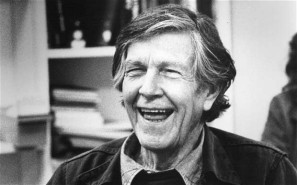
John Cage and his memorable smile

On a side note, it’s important to know that John Cage didn’t pull the length of 4’33’’ from thin air.  He arrived at the 3 movements – totalling 4 minutes and 33 seconds – by piecing together a series of smaller lengths of time.  Those smaller increments were arrived at by chance operations – a method he developed through the I Ching (an ancient Chinese text, also known as the Book of Changes).

An important theme throughout John Cage’s life was that silence doesn’t exist. This idea stemmed from a profound experience he had in an anechoic chamber (a room in which all sound is completely absorbed, leaving it “silent”), in which he was initially confounded that he was hearing sounds!  – only to realize it was his heart beating and blood pumping.  That day of the concert in 1954, the outdoor scene at Maverick Concert Hall became the music.  The rustling of people’s bodies in their seats became the music.  The rain became the music.  The murmuring became the music.  

When we stop to think about it, what actually is music?  When you start defining it, you quickly realize that the parameters you’re using are, in a sense, expendable.  Of course, we could argue for days about this.  But in my mind, what truly defines music, and indeed all art, is communion – a shared moment. A moment that sheds light on some small piece of humanity, which, ultimately, is people gathering in shared beauty.  And before you argue that 4’33’’ isn’t beautiful, or that a piano with a bunch of screws stuck in between its strings isn’t beautiful (Cage was a pioneer of the prepared piano), consider the first quote at the top of this post.  When you believe in beauty, you see it, even in unexpected places.

11-jco_060_001
The radiant love of Merce Cunningham and John Cage

As a shared singular moment, the beauty of music isn’t found just in those fleeting sounds, but in each and every experience that leads up to the performance of those sounds, in both the creator and the listener.  As a young man, John Cage had deeply questioned his art, sexuality, and whole being.  He was married to a woman for ten years, and by all accounts it was a fairly happy and friendly relationship.  But ultimately it wasn’t who he was, and when he met dancer and choreographer Merce Cunningham, that became abundantly clear.  After divorcing his wife, Cage and Cunningham spent the rest of their lives together in a wonderfully happy, romantic and creative partnership. 4’33’’ is a shared moment of inward realizations, of our need to express the inexpressible.  And it is the culmination of Cage’s entire life until that moment. Each and every performance of 4’33’’ is an invitation to quiet our minds and truly listen, both inwardly to ourselves and outwardly to the world.  And what could be more beautiful than that?

In my mind, John Cage essentially gave us the truest definition of art through a piece that’s a blank canvas.  Isn’t that remarkable?

Through Cage’s deeply-felt spirituality and exploration of zen Buddhism he realized that when we truly listen, we arrive at something profound.  I urge you to take a moment today and listen quietly – maybe even for 4 minutes and 33 seconds – and see what you discover.  There is an infinite amount of beauty around you, as well as within you, yet to be discovered.

“Our business in living is to become fluent with the life we are living, and art can help this.”

********************************************************

I just finished an incredible 3 days recording my first solo album with Grammy-winning engineer and producer Adam Abeshouse.  On the album are 3 gorgeous John Cage pieces, along with raga-based works by Michael Harrison with tabla and tambura, and a fabulous work by Donnacha Dennehy!  If you’d like to stay in touch and find out when it’s being released, fill out the form on my contact page. I send out email updates very infrequently, so it will certainly not be a strain on your inbox!  

http://www.sophiavastek.com/contact/   

********************************************************

One of the pieces that will be included on my recording:

https://www.youtube.com/watch?v=0Fhc3Tbnhsc

  *   *   *   *   *

I can’t recommend this book enough.  It’s a slow journey, but there is so much wisdom and heart within its pages.  This is the one I keep on my nightstand and which I find myself returning to again and again.

http://www.amazon.com/Silence-Lectures-Writings-Anniversary-Edition/dp/0819571768

This book is also an amazing and beautiful read, and a perspective on John Cage that hadn’t been fully explored in book form prior.  Highly recommended! http://www.amazon.com/Where-Heart-Beats-Buddhism-Artists/dp/0143123475/ref=sr_1_1?s=books&ie=UTF8&qid=1460754312&sr=1-1&keywords=where+the+heart+beats