Found in Translation

Somewhere the original harmony must exist,
hidden somewhere in the vast wilds.
In Earth’s mighty firmament,
in the far reaches of swirling galaxies,
in sunshine,
in a little flower, in the song of a forest,
in the music of a mother’s voice,
or in teardrops – 
somewhere, immortality endures, 
and the original harmony will be found.
How else could it have formed
in human hearts –
music?  

It must be somewhere, the original harmony,
somewhere in great nature, hidden.
Is it in the furious infinite,
in distant stars’ orbits,
is it in the sun’s scorn,
in a tiny flower, in treegossip,
in heartmusic’s mothersong
or in tears?
It must be somewhere, immortality,
somewhere the original harmony must be found:
how else could it infuse
the human soul,
that music?

These are two translations of the poem titled Muusika by Juhan Liiv (1864-1913). Though I think both versions are startlingly beautiful, one of the translators wondered if in fact the poetry has somehow been lost in translation, hoping that the reader would be able to intuit what the translations had lost.  The Estonian language it seems, like all languages, has unique and barely translatable ways of saying things, and I found the comparison of these two translations fascinating. Look at how much is found in Liiv’s words.

The poem came to my attention because of a setting by Estonian composer Pärt Uusberg (b. 1986), which I urge you to listen to here:

Muusika by Part Uusberg

Juhan Liiv was born into the extreme poverty of 19th century serfdom in Estonia. Physically weak and mentally ill, he died from pneumonia after a conductor pushed the ticketless poet off a train, causing him to walk home in freezing weather for two weeks.  Liiv’s hardships, as with so many artists, translated into insightful understandings of the world around him, and his poetry, though often gloomy, expresses great love for his country.

Music – Muusika – is a vital part of Estonian identity, as movingly told in a 2008 film called The Singing Revolution.  As the documentary shows, music played an important role in the largely peaceful protests in 20th century Estonia. Before and after World War II Estonians used a tradition of communal singing to see them through the darkest days of oppression by the Nazis and then the USSR.  Not just as a comfort, but as a subversive way of maintaining their culture and of uniting their people.  The film showed the people of Estonia coming together to sing in ways that ended up thwarting the Soviets’ attempts to force the Estonians to submit to their authority.  I don’t know if the film is available on Netflix, but I recommend trying to find it.

Yet another reminder of the ways that music and poetry connect us across time and space, capturing in sound and words our capacity for wonder and our innate yearning for freedom.

Peace.
Sonya

  *   *   *   *   *

Where I’ll be:

June 12 through August 14 – organist/choir director for the 10:00 am and 5:00 pm services at St. John’s (Norwood), 6701 Wisconsin Avenue, Chevy Chase, Maryland. Maybe you’d like to come and sing with the Summer Choir there? 9:15 am rehearsal.

June 13 through 17 – The annual conference of The Association of Anglican Musicians, an organization that has been a source of some of my closest friends, supportive colleagues, and an inspirational reminder of all that is good about The Episcopal Church. We meet this year in Stamford, Connecicut.

* * * * *

This blog represents my attempt to put thoughts together on various things that seem to connect – in my mind anyway. More often than not new ideas first involve reaching back to what was and I can only hope that the prehistoric San cave painting at the top of this page inspires all kinds of new connections between old and new.

Feel free to pass this message along to anyone who might be interested. You can simply subscribe (look for the “Subscribe” button at the top of the post) to get a reminder of new posts, or you can register with a user name and password in order to comment. If a community conversation comes out of this, all the better. We have so much to share and so much to be grateful for.
Hello Summer. Hello Death.

In an excellent sermon I heard this past Sunday, preached by The Rev. Sari Ateek, we were reminded that God doesn’t need us to be worthy, just open to the ways that God will work with, and in, our lives.  Let’s face it, we’ll never actually be worthy of anyone’s unconditional love, but as Christians we are asked again and again in the New Testament to die to self and be born again as we attempt to become worthy.   Not once in a while or just during Lent, but every day.  As one Lenten hymn reminds us, So daily dying to the way of self, so daily living to your way of love.  (The Hymnal 1982, No. 149, v.2).  Every day we have the chance to be new, to be better, to let our old selves die and find new life.

Perhaps this in part explains why I am feeling so fortunate to be conducting performances of Brahms’ Requiem this week.  You might have noticed that requiem settings are most often performed as part of November’s season of remembrance or during the Lenten time of tombs and yearnings for Easter’s resurrection.  But as summer beckons?  New life has already come.  The evidence is in every garden and graduation ceremony and requiems don’t fit. Unless, perhaps,  as a reminder that resurrection of our souls happens whenever we open ourselves up to the possibility of change, even in the heat of summer.

Johannes Brahms (1833-1897), proud German, avowed humanist and ambivalent Christian, wrote his largest work based on the Catholic Requiem mass for the dead, but with the hope that it would be music that brought solace to the living.  The title of “German” comes from its language – a German text, rather than the traditional Latin, but  Brahms wished that it could have been called Ein menschliches Requiem (A Human Requiem).  He would be pleased to find that this work has been described as a meditation on mortality from a humanist point of view.

Brahms very likely began composing this music as a response to his sorrow at the death of his dearest friend, fellow composer Robert Schumann, and he continued working on it between the years 1857 and 1868, during which time his beloved mother also died. He not only eschewed the traditional Latin of requiem settings, but also the traditional liturgical texts, compiling his own from the Bible.  He notably failed to ever mention Jesus.  Perhaps he hoped that his Requiem would transcend any particular religion.

Though known to be a gruff misanthrope, Brahms concentrated on themes of everlasting joy in this music.  The word Selig (blessed) begins and ends this Requiem, and the choir frequently sings about Freude (joy).  There is no fire and brimstone in Brahms’ views on mortality, only hope. As if Brahms is giving the listener permission to live in hope, without the rigors of belief.

There is an expansiveness to his thinking, and it is expressed in the music through the large ranges for the singers, luxurious sounds from the orchestra, and sweeping musical lines.  As a young musician said to me in a recent conversation about Brahms’ music in general, even the briefest of his pieces seems to encompass the entirety of life.  Its richness and complexities and confusions.  Its joys and sorrows.

Walking into summer, limbs bared to the sun, arms outstretched as we slough off old ways and open ourselves to new life. I’m well aware that mourning the death of one we have loved is not the same as dying to self and being born again. But thinking about Brahms’ Requiem made me intrigued by a possible connection.  Some part of ourselves dies when a beloved one has died, and we slowly learn to find new life in some way for that relationship. When I planned last fall to perform Brahms’ Requiem with a choir made up of those working at The World Bank and IMF I could not have guessed how right it would feel now, on the brink of summer, to let parts of me die as I welcome the changes of new life.

Brahms’ Requiem, Movement 7

Peace,

Sonya

Where I’ll be:
May 22, May 29 and June 5 – organist/choir director for the 9:00 am, 11:15 am and 5:00 pm service at St. John’s, Norwood, 6701 Wisconsin Avenue, Chevy Chase, Maryland. Experienced choral singers who would like sing with the choir there, come at 10:30 for rehearsal before the service.

May 31, June 2 and June 6 – performances of Brahms’ Requiem with the World Bank/IMF Chorus and orchestra, 1:00 pm each of these dates. United Church (G and 20th) on May 31. For performances at the World Bank (June 2) and IMF (June 6) visitors will need to get free passes by contacting worldbankimfchorus@gmail.com and allow a few extra minutes to get through the security checks at these institutions.

June 12 through August 14 – organist/choir director for the 10:00 am and 5:00 pm services at St. John’s, Norwood. Come and sing with the Summer Choir there. 9:15 am rehearsal.

June 13 through 17 – The annual conference of The Association of Anglican Musicians, an organization that has been a source of some of my closest friends, supportive colleagues, and an inspirational reminder of all that is good about The Episcopal Church.  We meet this year in Stamford, Connecicut.

* * * * *

This blog represents my attempt to put thoughts together on various things that seem to connect – in my mind anyway. More often than not new ideas first involve reaching back to what was and I can only hope that the prehistoric San cave painting at the top of this page inspires all kinds of new connections between old and new.

Feel free to pass this message along to anyone who might be interested. You can simply subscribe (look for the “Subscribe” button at the top of the post) to get a reminder of new posts, or you can register with a user name and password in order to comment. If a community conversation comes out of this, all the better. We have so much to share and so much to be grateful for.

Evensong

During a recent time of transition, as I questioned so much about my vocation, I realized that I was attending the Anglican service of Evensong quite often. Christ Church (Georgetown), St. Francis (Potomac), St. Thomas (Fifth Avenue, NYC), Washington National Cathedral and Christ Church Christiana Hundred (Delaware) became scenes of gentle healing, much needed and quietly strengthening.  For the uninitiated, Evensong is that afternoon offering to our ears, hearts and minds of prayers sung by a choir on the listener’s behalf.

I recalled that during a sabbatical in 2013 I had attended Evensong twelve times in seven different churches or cathedrals over a 3 month period. I was inspired by the most glorious music, written for God, sung beautifully by well-rehearsed choirs as part of a liturgy.  Not a performance, but performed well. While I simply listened, I worshiped. I was able to absorb the beauty of the architecture around me, admire the composers’ craft, and appreciate the shape that liturgy takes in the hands of musicians who have practiced many long hours. On a good day liturgy can come together to create flow – a psychological term that describes a feeling of energized focus, full involvement, and enjoyment in the process of an activity. In this case, the activity for me was participating in liturgy as a listener.

Recently, I pulled Gail Godwin’s 1999 novel, Evensong, off the shelf to re-read. I’ve always loved her writing with its artful descriptions of simple joys and complex emotions. She intimately knows the Episcopal church, and writes perceptively about the broken people who are all around us. Who are us.  In Evensong she writes about those living in and passing through a small North Carolina town. Each character in some way has been abandoned, mostly by a parent or spouse, but also by their friends, schools, and yes, even their churches. I hadn’t noticed this theme the first time I read the book, but it was quietly apparent this time around.  God hadn’t abandoned any of Godwin’s characters, of course, but each sometimes felt alone in their earthly abandoned states.  And it would be unrealistic to think you might not question whatever grains of faith you had during those times.

“I’m beginning to think that the times when you lose your faith are the times of your deepest blessing. . . . It is the dark night of the soul. The mystics have written about it. You’re at your very lowest, you have no further to fall, everything is dark and then you can kind of be quiet and see what is speaking to you out of the darkness. . . . I would be more worried about the person who never lost her faith.” — Gail Godwin, from an interview in 1999.

I don’t think anyone feels particularly blessed in their aloneness, but perhaps that is the gift of Evensong. Finding an understanding of the difference between loneliness and aloneness, you can be quiet…experience what is speaking to you out of the darkness, and actively listen for wisdom, reminding you that you are not alone after.

The traditional canticles sung during Evensong are Mary’s Magnificat and Simeon’s Nunc dimittis. The link below is to one of my favorite settings, by Tudor court composer Orlando Gibbons.  Both Mary and Simeon are alone in their prayers, speaking to God in the darkness…and listening.

Peace,

Sonya


Where I’ll be:

May 22, May 29 and June 5 – organist/choir director for the 9:00 am, 11:15 am and 5:00 pm service at St. John’s, Norwood, 6701 Wisconsin Avenue, Chevy Chase, Maryland.  Experienced choral singers who would like sing with the choir there, come at 10:30 for rehearsal before the service.

May 31, June 2 and June 6 – performances of Brahms’ Requiem with the World Bank/IMF Chorus and orchestra, 1:00 pm each of these dates.  United Church (G and 20th) on May 31.  For performances at the World Bank (June 2) and IMF (June 6) visitors will need to get free passes by contacting worldbankimfchorus@gmail.com and allow a few extra minutes to get through the security checks at these institutions.

June 12 through August 14 – organist/choir director for the 10:00 am and 5:00 pm services at St. John’s, Norwood.  Come and sing with the Summer Choir there.  9:15 am rehearsal.

* * * * *

This blog represents my attempt to put thoughts together on various things that seem to connect – in my mind anyway. More often than not new ideas first involve reaching back to what was and I can only hope that the prehistoric San cave painting at the top of this page inspires all kinds of new connections between old and new.

Feel free to pass this message along to anyone who might be interested. You can simply subscribe (look for the “Subscribe” button at the top of the post) to get a reminder of new posts, or you can register with a user name and password in order to comment. If a community conversation comes out of this, all the better. We have so much to share and so much to be grateful for.

Communion

Today’s posting is by guest blogger Sophia Vastek.  She is a pianist, based in New York City, who just happens to be my daughter.  I think you will enjoy her insights into a composer whom you have likely not given much serious thought to before.

*   *   *   *   *

“The first question I ask myself when something doesn’t seem to be beautiful is why do I think it’s not beautiful. And very shortly you discover that there is no reason.”

This quote is by American composer John Cage, from a book of his writings (linked below) that sits permanently on my nightstand.  I started learning about John Cage several years ago, but I became increasingly drawn to him soon after my father had died.  I realized I was asking, and struggling with, many of the same kinds of questions that Cage did back in the middle of the last century. Why do I make music?  What purpose does it serve ultimately?  At a time when my own musicality felt like an empty shell, John Cage was an important part of the inspiration that kept me going.  

Whether you have some knowledge of John Cage or not, you’ve most likely come across references to him.  In particular, his “silent” piece, 4’33”– in which a pianist sits silently at the piano for 4 minutes and 33 seconds – has echoes in all reaches of our popular culture.  If you didn’t notice before, you will now!  It’s a trope that gets parodied and used again and again.  It’s also a profound work of art, and profoundly misunderstood, much like the man who created it.

“Everything we do is Music.”

Imagine this scene: An audience has gathered just south of Woodstock, New York on August 29, 1954 at Maverick Concert Hall, a barn-like, open air venue.  David Tudor, a soon-to-be well-known pianist of his day, is about to perform an exciting program of music by current, leading composers.  John Cage’s 4’33” is on the program (listed incorrectly as a work of 4 movements).  When it comes time, Tudor sits down at the piano, closes the piano lid, and takes out a stopwatch. After 30 seconds he stops the stopwatch and opens the lid, then closes the lid and restarts it.  2 minutes and 23 seconds later he stops it again.  Then restarts. And after the final minute and 40 seconds, the original three movements of 4’33’’ were given their first performance. During this “silent” stretch of time, the leaves were rustling, audience members grew restless, some started whispering and talking to each other, some walked out.  

It started to rain lightly.  

This is one of those moments in cultural history… the reverberations are still being felt.  John Cage lost friends and colleagues following that concert.  In fact, more than 60 years later, one can still find conversations, and arguments, being had about what this piece means and what in the world John Cage was trying to say.

Like all brilliant pieces of art, there are infinite ways to think about and experience 4’33’’.  Truly.  But contrary to what may have initially popped into your head, it was not a publicity stunt.  The more one learns about John Cage the more impossible that idea seems.  He had come up with the idea for a silent piece years before the actual premiere, but it had taken him that time to muster the courage to present it for fear of not being taken seriously as a composer.

john-cage
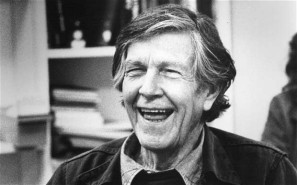
John Cage and his memorable smile

On a side note, it’s important to know that John Cage didn’t pull the length of 4’33’’ from thin air.  He arrived at the 3 movements – totalling 4 minutes and 33 seconds – by piecing together a series of smaller lengths of time.  Those smaller increments were arrived at by chance operations – a method he developed through the I Ching (an ancient Chinese text, also known as the Book of Changes).

An important theme throughout John Cage’s life was that silence doesn’t exist. This idea stemmed from a profound experience he had in an anechoic chamber (a room in which all sound is completely absorbed, leaving it “silent”), in which he was initially confounded that he was hearing sounds!  – only to realize it was his heart beating and blood pumping.  That day of the concert in 1954, the outdoor scene at Maverick Concert Hall became the music.  The rustling of people’s bodies in their seats became the music.  The rain became the music.  The murmuring became the music.  

When we stop to think about it, what actually is music?  When you start defining it, you quickly realize that the parameters you’re using are, in a sense, expendable.  Of course, we could argue for days about this.  But in my mind, what truly defines music, and indeed all art, is communion – a shared moment. A moment that sheds light on some small piece of humanity, which, ultimately, is people gathering in shared beauty.  And before you argue that 4’33’’ isn’t beautiful, or that a piano with a bunch of screws stuck in between its strings isn’t beautiful (Cage was a pioneer of the prepared piano), consider the first quote at the top of this post.  When you believe in beauty, you see it, even in unexpected places.

11-jco_060_001
The radiant love of Merce Cunningham and John Cage

As a shared singular moment, the beauty of music isn’t found just in those fleeting sounds, but in each and every experience that leads up to the performance of those sounds, in both the creator and the listener.  As a young man, John Cage had deeply questioned his art, sexuality, and whole being.  He was married to a woman for ten years, and by all accounts it was a fairly happy and friendly relationship.  But ultimately it wasn’t who he was, and when he met dancer and choreographer Merce Cunningham, that became abundantly clear.  After divorcing his wife, Cage and Cunningham spent the rest of their lives together in a wonderfully happy, romantic and creative partnership. 4’33’’ is a shared moment of inward realizations, of our need to express the inexpressible.  And it is the culmination of Cage’s entire life until that moment. Each and every performance of 4’33’’ is an invitation to quiet our minds and truly listen, both inwardly to ourselves and outwardly to the world.  And what could be more beautiful than that?

In my mind, John Cage essentially gave us the truest definition of art through a piece that’s a blank canvas.  Isn’t that remarkable?

Through Cage’s deeply-felt spirituality and exploration of zen Buddhism he realized that when we truly listen, we arrive at something profound.  I urge you to take a moment today and listen quietly – maybe even for 4 minutes and 33 seconds – and see what you discover.  There is an infinite amount of beauty around you, as well as within you, yet to be discovered.

“Our business in living is to become fluent with the life we are living, and art can help this.”

********************************************************

I just finished an incredible 3 days recording my first solo album with Grammy-winning engineer and producer Adam Abeshouse.  On the album are 3 gorgeous John Cage pieces, along with raga-based works by Michael Harrison with tabla and tambura, and a fabulous work by Donnacha Dennehy!  If you’d like to stay in touch and find out when it’s being released, fill out the form on my contact page. I send out email updates very infrequently, so it will certainly not be a strain on your inbox!  

http://www.sophiavastek.com/contact/   

********************************************************

One of the pieces that will be included on my recording:

  *   *   *   *   *

I can’t recommend this book enough.  It’s a slow journey, but there is so much wisdom and heart within its pages.  This is the one I keep on my nightstand and which I find myself returning to again and again.

http://www.amazon.com/Silence-Lectures-Writings-Anniversary-Edition/dp/0819571768

This book is also an amazing and beautiful read, and a perspective on John Cage that hadn’t been fully explored in book form prior.  Highly recommended! http://www.amazon.com/Where-Heart-Beats-Buddhism-Artists/dp/0143123475/ref=sr_1_1?s=books&ie=UTF8&qid=1460754312&sr=1-1&keywords=where+the+heart+beats


Going Home

I know something about immigration.  My father immigrated from India, my first husband came to the U.S. from Poland, my brother immigrated to Sweden, my in-laws were part of the Great Migration that so many African-Americans made from south to north in the 1940’s and 50’s, and the German and Scottish immigrants that make up my maternal half are well documented by a genealogically-minded uncle.  Immigration represents the most radical form of leaving home, and I saw, as these family members got older, how much childhood homes tugged on them.  Some part of them longed for a home they hadn’t been part of for a long time.

Going home is a theme that inspires a lot of literature, including St. Luke’s tale of the prodigal son.  A carefree young man leaves home, making his father sad and his brother angry, living a wastrel’s life, and then warmly welcomed back home when he tired of his dissipated life.  It was  story used in 1884 by a 22 year student named Claude Debussy, who entered the prestigious competition for the Prix de Rome with a brief work, L’enfant prodigue.  It was a challenge for him to compose a piece of music that was conservative enough to please an academic committee and yet still expressed his growing interest in a new musical language that incorporated the exoticism and folk sounds he had encountered in his travels.  An artistic language that came to be known as impressionism.  I’ve long wanted to do Debussy’s little one-act opera, which might more properly be categorized as a cantata, or more evocatively as a scene lyrique, and I will be joined by a wonderful cast of singers (Mary Shaffran, Andrew Brown, and James Shaffran) in a performance this coming Sunday at 7:30 p.m. at Bradley Hills Presbyterian Church.L'Enfant Flyer

What I love about Debussy’s work, besides the shimmering hints of a musical style that would soon mature in works such as Prélude à l’après-midi d’un faune and Clair de lune, is the prominence of a missing figure in St. Luke’s account…the boy’s mother.  Surely she anguished over her son’s absence as well. This is a rare chance to hear this beautiful little gem and I hope you’ll join us on Sunday at 7:30 if you’re able.

The prodigal son does go home, celebrated and fussed over with great joy and feasting.  After all of his travels and experiences, I wonder if he really is able to be at home though.  The longing for a childhood home I have seen in my own family members was always accompanied by a realization that they couldn’t actually ever really go home. Either because places and people changed, and what they remember as home didn’t exist anymore, or just as surely because they themselves had changed and weren’t the same person who once lived in that home.

We might feel sad at this inability to go back, or we might find peace when we look more deeply inside ourselves to find home within.  After all, at birth we are given a home of flesh and blood and mind.  We are told then that at death we are welcomed into an eternal home with God.  In between, our earthly homes are really shaped more by the people we love rather than the places we’ve lived.  So the prodigal son may have found home, upon his return, in the warmth of his parents’ embrace, but he will soon take his prodigal experiences with him to new homes.


Peace,

Sonya

Where I’ll be:

April 24 – performing L’enfant prodigue, Debussy’s one-act opera, with Mary Shaffran, James Shaffran and Andrew Brown, at Bradley Hills Presbyterian Church, Bethesda, 7:30 p.m. ($15 suggested donation)

May 22-August 14 I will be serving as a sabbatical replacement for the Music Director at St. John’s Norwood, 6701 Wisconsin Avenue, Chevy Chase, MD

* * * * *

This blog represents my attempt to put thoughts together on various things that seem to connect – in my mind anyway. More often than not new ideas first involve reaching back to what was and I can only hope that the prehistoric San cave painting at the top of this page inspires all kinds of new connections between old and new.

Feel free to pass this message along to anyone who might be interested. You can simply subscribe (look for the “Subscribe” button at the top of the post) to get a reminder of new posts, or you can register with a user name and password in order to comment. If a community conversation comes out of this, all the better. We have so much to share and so much to be grateful for.


Both Sides Now

For everything there is a season, and a time for every matter under heaven:
a time to be born, and a time to die;
a time to plant, and a time to pluck up what is planted;
a time to kill, and a time to heal;
a time to break down, and a time to build up;
a time to weep, and a time to laugh;
a time to mourn, and a time to dance;
a time to keep silence, and a time to speak;
a time to love, and a time to hate;
a time for confusion, and a time for understanding.  
                                                    –Ecclesiastes 3

(Ok, I admit the last line is mine, but I think King Solomon would approve.)

The opposite of a correct statement is a false statement. But the opposite of a profound truth may well be another profound truth. – Danish physicist Niels Bohr

A book about math and science that a friend recommended as highly readable had been languishing on my bedside table for a couple of years now.  I can’t begin to explain why I picked it up as my “beach reading” for a quick trip to Florida a few weeks ago, but The Universe and the Teacup by K.C. Cole had me with its subtitle: The Mathematics of Truth and Beauty.  The author suggested ways that the realm of physics offers us the opportunity to understand how we might avoid those often impossible choices between one valid truth and another.  Not mourning or dancing, but times for mourning and dancing.  Seeing different truths gives us a deeper insight into a problem, just as mourning and dancing offer us a fuller understanding of life.  Cole gives the example of light – at once a wave and a particle.  Life, she reminds us, can be explained by biology as much as by novels and poetry.  Or as Joni Mitchell wrote, clouds are ice cream castles in the air one moment and the next, simply something that block the sun.

Both Sides Now – Joni Mitchell

A young friend gave me permission to share excerpts from an opinion piece she wrote for her high school newspaper recently.  I was moved by her ability to articulate the practicality of impracticality.  That doctors and poets are equally responsible for moving humanity forward in our search for understanding.

So We Beat On: Why Art Matters by Sophia Higgins

Here’s the truth: Life isn’t fair.  Or perfect, or quantifiable by any metric.  There are people who live under bridges and in war zones and with heroin addicts for parents.  People are unequal and things often don’t go as planned.  That’s just the way things are.  We exist to alleviate suffering…Doctors and the Mother Teresa’s of the world keep us living…but there’s still a group of people whose purpose is not so clear.  Of what use is the poet, the musician, the painter?  Poetry doesn’t keep you alive.  A song can’t cure disease.  Art is what we survive for…it finds meaning beyond the suffering…connecting people in the most basic expressive way, [creating something that touches] you despite a gap of space and time.

Art is pointless

The fact that a “theory of everything” in physics remains elusive just might reveal the limitations of having any single point of view.  Perhaps understanding requires us to stay open to contrasting perspectives and truths.  K.C. Cole, in The Universe and the Teacup quotes 20th century theoretical physicist Victor Weisskopf:

What’s beautiful in science is that same thing that’s beautiful in Beethoven.  There’s fog of events and suddenly you see a connection.  It expresses a complex of human concerns that goes deeply to you, that connects things that were always in you that were never put together before.

Symmetry and proportions are often our guides through the fog as we search for meaning and beauty. As Cole writes, “symmetry therefore lends a satisfying concreteness to the vague sense that there is beauty in truth, and truth to beauty.” Could the symmetry of seeming opposites create different perspectives and definitions which take us to those deep truths we yearn to understand?

Peace,

Sonya


Where I’ll be:

April 17 – Church of the Redeemer, 6201 Dunrobbin Drive, Bethesda MD, playing for their 10:30 am service

April 24 – performing L’enfant prodigue, Debussy’s one-act opera, with Mary Shaffran, James Shaffran and Andrew Brown, at Bradley Hills Presbyterian Church, Bethesda, 7:30 p.m. ($15 suggested donation)

 *   *   *   *   *

This blog represents my attempt to put thoughts together on various things that seem to connect – in my mind anyway. More often than not new ideas first involve reaching back to what was and I can only hope that the prehistoric San cave painting at the top of this page inspires all kinds of new connections between old and new.

Feel free to pass this message along to anyone who might be interested. You can simply subscribe (look for the “Subscribe” button at the top of the post) to get a reminder of new posts, or you can register with a user name and password in order to comment. If a community conversation comes out of this, all the better. We have so much to share and so much to be grateful for.


Joy in Sadness

You’ve probably heard music written in a minor key that ends with a final major chord which lands on the ears like a ray of sunshine coming through the clouds. That kind of moment in music is known as a Picardy third – taking a minor chord and raising the middle note to create a major chord – and it certainly has a place in music-making.  Sadness to cheerfulness.  A happy ending.

Recently, while preparing Bach’s Fantasy and Fugue in G Minor, BWV 542 for a concert, I found myself grinning during a particularly favorite passage near the end of the fugue. I felt such joy shining through the minor key.

Sun through cloudsIt’s not a big step for most of us to think about the possibility of joy coming after sadness goes away.  I think we have a harder time thinking about experiencing joy IN sadness. Not so much finding that the dark clouds have moved away and the sun is back in full force, but those magical times when diffused rays of sun come through the dark clouds.  Perhaps when someone we love has died and we are mourning their loss, yet feeling grateful at the same time that they were ever part of our lives. Or when someone we trust betrays us, feeling fortunate to have new insights into what true friendship looks like in contrast.  Perhaps something doesn’t work out the way we hope, yet we have enough wisdom to find gladness in the possibilities of our future.

In yoga, a set of principles known as niyamas offer the prescription of santosha as a way of finding joy through contentment with what is.  Not what could or should be, but an embrace of the place where we are now.  Dark clouds and all.

I am no Pollyanna about finding rays of sun through the darkest clouds.  It would be unrealistic, not to mention unkind, to expect victims of tragedy to find joy in their pain. Maybe, just maybe, in that case we can find ways to be the diffused light so desperately needed by others in our world.  It seems like very little, yet perhaps we can simply cling to what makes us human by continuing to pursue understanding and beauty.  And that brings me back to Bach’s great fugue in G minor, even ending, as it does, with a Picardy third. 

Here is what this Holy Week holds for me:  playing for a Maundy Thursday service at Episcopal High School in Alexandria, attending the Good Friday service at Washington National Cathedral, and for the first and perhaps only time ever, worshiping  with my husband on Easter Sunday, also at Washington National Cathedral.  Having experienced Holy Week in some sense already this year, I am grateful to learn that I still care about being in church and am gingerly walking my way through the Triduum.

Peace,

Sonya

This blog represents my attempt to put thoughts together on various things that seem to connect – in my mind anyway.  More often than not new ideas first involve reaching back to what was and I can only hope that the prehistoric San cave painting at the top of this page inspires all kinds of new connections between old and new.

Feel free to pass this message along to anyone who might be interested.  You can simply subscribe (look for the “Subscribe” button at the top of the post) to get a reminder of new posts, or you can register with a user name and password in order to comment.  If a community conversation comes out of this, all the better. We have so much to share and so much to be grateful for.

Seven Divided by Three

A composer-friend wrote a piece for me a few weeks ago.  A lovely choral work that sets the Easter text by Charles Wesley, Love’s redeeming work is done.  My friend, Rob Lehman, thought the text would bring some comfort during a difficult time in my life, and having friendship take the form of a new creation was deeply moving.  An early Easter present:

Love’s redeeming work is done, fought the fight, the battle won, Death in vain forbids him rise; Christ has opened paradise.

Lives again our glorious King; where, O death, is now thy sting? Once he died our souls to save, where thy victory, O grave?

Soar we now where Christ has led, following our exalted Head; made like him, like him we rise, ours the cross, the grave, the skies.

I had told Rob a few years ago that I loved pieces in 7/8 time, and he promptly wrote a sparkling setting of the wonderful 19th century American text, How can I keep from singing, for me…in 7/8 time of course.  When I called to thank him for this new work a few weeks ago, I reflected on why 7/8 is so appealing to me, wondering aloud if it is because performing a piece in 7/8 time requires a musician to divide seven into three parts – albeit three unequal parts.  2+2+3 or 3+2+2 or even 2+3+2.   We know the importance of three in our thinking.   Spiritually it’s the Trinity of Father, Son and Holy Ghost.  Personally it might be the trinity of friends, family and work that makes claims on our time and affection.  The power of three makes itself known in all kinds of ways in our lives. The three little pigs…Goldilocks and the three bears… three people walked into a bar…bad things happen in threes.

But 7/8 time is the reminder that the three parts of something are never equally present at any given time.  Spiritually, there are times when we walk more closely with the Son, depend more on the Father, or are more aware of the Holy Spirit working in our lives. Certainly, friends and family and work play unequal roles at various points in our life. Which isn’t to say we don’t need a balance of these three parts, just that they can’t be equally important at any given moment.

I wrote about 7/8 years ago, describing the dance I felt inherent in that time signature. Not a waltz, or any other kind of dance you would see in the ballroom, but a dance where varying parts are made into a whole. A woman responded, then, writing that she had multiple sclerosis and nothing made her happier than being held by her husband as they danced together in graceful awkwardness. That’s why I love 7/8 time.

 *  *  *  *  *

Where I’ll be:

Sunday, March 13

first…Bradley Hills Presbyterian Church, substitute organist for their 10:30 am service and then…Chevy Chase Presbyterian Church’s annual Bach Marathon which runs from 2:00-7:00.  I’ll be playing two of my favorite preludes and fugues during the 4:30-5:00 time slot.

This blog represents an attempt to continue putting thoughts together on various things that seem to connect – in my mind anyway!  More often than not new ideas first involve reaching back to what was and I can only hope that the prehistoric San cave painting at the top of this page inspires all kinds of new connections between old and new.

Feel free to pass this message along to anyone who might be interested, and if a community conversation comes out of it, all the better.  We have so much to share and so much to be grateful for.

Peace,
Sonya


Getting Off the Ground

More love and kindness.  I just heard a presidential candidate say those words, and I’m not often so completely in agreement with any politician.  After getting knocked down, a little love and kindness go a long way in someone’s life. Having been knocked down myself recently, it meant a great deal to me to have people show so much kindness in their support of my effort to get this new blog off the ground and I thank those who read last week’s inaugural Notes for New Day.

This is not really a Notes for a New Day posting.  I’ll be writing every other week, with a piece called Seven Divided by Three coming out on March 10.  Meanwhile, I’m continuing to reach out to anyone who might be interested in reading my musings on the ways that the arts, spirituality and life intersect.

Interestingly, I played last weekend for the Atlas Performing Arts Center’s Intersections Festival 2016,  which was described as the place “where the art world and the real world intersect.”  That’s the place where I want to live and hope you’ll join me there.

This Sunday, March 6, I’ll be at St. Columba Episcopal Church with my friend, French harpist Isabelle Frouvelle.  We’ll be playing a beautiful piece for organ and harp by Marcel Grandjany as the prelude to their 11:15 service, and then, adding a Handel concerto, we’ll play as part of a program there at 2:00 (OrganPlusConcert2016). On March 13 I’ll be playing the 4:30-5:00 time slot during the annual Bach Marathon at Chevy Chase Presbyterian Church (Bach Marathon).

Love and kindness are running themes throughout Michael Moore’s new film, Where to Invade Next.  He looks abroad for ways that we, as Americans, can better respect the dignity of every human being.  Even if you’re not a fan of Moore, it’s difficult to argue with that need in this world.  He asks us to be better people.  Ones who use the tools of love and kindness to help everyone get up off the ground.

Somehow, this turned into a regular Notes for a New Day posting after all…

Peace,

Sonya

Notes for a New Day

Barbara Brown Taylor, in her 2006 book Leaving Church, wrote about her need to leave church in order to maintain a relationship with God, after a 20 year career of working in the Episcopal Church as a priest.

I recently stopped going to church as well, after a 20 year career as a church musician that never really seemed so much a career as a way of life.  I also can see the wisdom of leaving church in order to nurture a relationship with God, as awful as that initially sounds to someone who has grown up, raised a family, matured and planned to retire from a life in the church.

On my first Sunday after leaving church there was a snowstorm which happily made a decision about going to another church completely unnecessary.  Of course my husband and I wouldn’t be going anywhere that morning, but he gingerly asked, knowing my wounds were still raw, if we could have “home church.”  I painfully nodded yes, seeing that it was important to him that we do this, and he created a brief liturgy of words that began with the Collect for Purity.

I must have heard this prayer thousands of times over the course of my life, but he read the familiar words in a way that made them completely new to me.  I became aware of the words, which begin each celebration of the Eucharist, as something I was truly hearing for the first time.

Almighty God, unto whom all hearts are open, all desires known and from whom no secrets are hid

Cleanse the thoughts of our hearts by the inspiration of thy Holy Spirit, that we may perfectly love thee, and worthily magnify thy holy Name;

through Christ our Lord.  Amen.

Each word of the Collect for Purity promises the comfort of an embracing love that at the same time understands and forgives and expects more of us. These are thoughts that feel like good companions during a time of leaving church, of healing, and of moving into new days that require new ways of thinking and being.

  *   *   *   *   *

This blog is a new venture for me, after 8 years of writing for another forum.  It’s an attempt to continue putting thoughts together on various things that seem to connect, at least in my mind.  I believe that more often than not new ideas first involve reaching back to what was and I can only hope that the prehistoric San cave painting at the top of this posting inspires all kinds of connections between old and new.

Also new is what I’ll be doing this weekend, February 27 and 28 – playing Spanish music for keyboard and electric guitar with the Furia Flamenca Dance Company as part of the Intersections Festival at the Atlas Performing Arts Center. Several firsts for me right there in this melding of a dance tradition that has roots in the 18th century with instruments of this century. This Saturday at 8:00 pm and Sunday at 6:00 pm. (Atlas ArtsCenter)

Or join me at St. Columba Episcopal Church on Sunday, March 6 when French harpist Isabelle Frouvelle and I will be playing the prelude to their 11:15 service and playing again that same day as part of their 2:00 concert, Organ Plus for organ and various instruments. (St. Columba)

Feel free to pass this message along to anyone who might be interested, and if a community conversation comes out of it, all the better. We have so much to share and so much to be grateful for.

Peace,
Sonya